Source Japan Original Used Truck Crane for Construction Rescue Engineering
Find 30 Japan original used truck crane options for construction, rescue, and engineering service applications. Compare specifications including lifting capacities up to 100 tons, engine brands like Weichai and Mitsubishi, and hydraulic systems from Kato to identify suitable models for your operational needs.
Key considerations
Products List


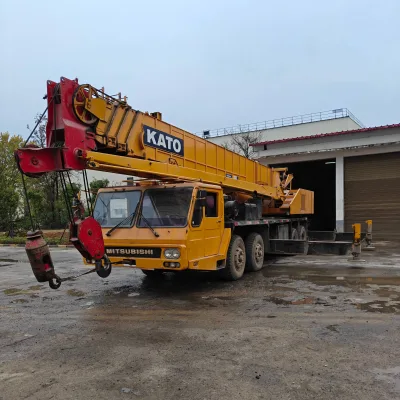


Used 70t Truck Crane with Good Refurbishment Good Condition Truck Lifting Crane
$35000.00 - $38000.00
Moq: 1


Well-Maintained Used Hydraulic Crane Second Hand Crane Truck Ready to Use
$20300.00 - $20700.00
Moq: 1


Comprehensive Sourcing Guide
Japan Original Used Truck Crane Sourcing Guide
Procuring a used truck crane from Japan requires a disciplined approach to verifying mechanical integrity, hydraulic performance, and historical maintenance records. The Japanese market is renowned for its rigorous maintenance standards and high residual value, but the term "original" often implies specific manufacturing origins that must be cross-referenced with current listing data. Buyers must navigate a landscape where listings may conflate Japanese chassis origins with Chinese assembly or rebranding, necessitating a strict verification of the crane’s actual place of origin and component lineage.
This guide provides evidence-based procurement strategies for sourcing these heavy-duty assets. It focuses on interpreting observed listing signals, verifying critical technical specifications, and ensuring compliance with international safety standards. By adhering to these protocols, procurement teams can mitigate the risks associated with second-hand heavy machinery, ensuring that the acquired equipment meets operational demands for construction, rescue, and engineering services without compromising on safety or efficiency.
Product Scope and Observed Listing Signals
The current market for used truck cranes presents a wide variance in specifications, with observed prices ranging from $10,800 to $300,000 USD and a minimum order quantity (MOQ) of one unit per listing. This price dispersion reflects differences in lifting capacity, which spans from 5-7 tons to over 16 tons, and maximum lifting heights exceeding 40 meters. Buyers should interpret these ranges as indicators of diverse machine classes, from smaller utility cranes to heavy-duty 50-ton and 100-ton models, each requiring distinct logistical and operational considerations.
Listing attributes frequently highlight key performance indicators such as a rated lifting moment of 868 kNm and a span of 6.4 meters, which are critical for assessing load chart compliance. However, procurement teams must remain cautious of conflicting origin claims; while some listings specify Japan as the place of origin, others indicate China, with brands like Sany or Zoomlion. This discrepancy suggests that "Japan original" may refer to the crane’s design heritage or initial market, rather than its current manufacturing location, requiring buyers to verify the actual country of manufacture for the specific unit in question.
Technical Specifications to Verify
Verification of the crane’s structural and hydraulic systems is paramount, with a focus on the shaft number type, which can be either straight arm or folding. The jib configuration, observed as two-arm, three-arm, or five-arm, directly impacts reach and stability, necessitating a review of the specific model’s load chart against the intended application. For instance, models like the NK500E or TL-300E offer distinct capabilities, and buyers must confirm that the maximum lifting weight and height align with project requirements, especially for applications involving rescue or engineering services.
The core components, including the motor, pump, and gearbox, are critical determinants of long-term reliability. Listings often cite brands such as Weichai or Mitsubishi for engines and Kato for hydraulic valves, which are indicators of quality but must be validated against the physical unit. Additionally, the weight of the machine, observed at 44,600 kg or 50,000 kg, affects transportation logistics and site preparation. Buyers should request detailed weight distribution data and single package dimensions, such as 14.53x3.72x2.8 meters, to ensure compatibility with shipping containers and site access constraints.
Compliance and Safety Documentation
Compliance with international standards is essential for the safe operation and insurance coverage of used cranes. Certifications such as ISO, CE, and GS are frequently cited in listings, indicating adherence to specific manufacturing and safety protocols. However, buyers must verify the validity and scope of these certifications, as they may apply to the original new machine rather than the current used condition. The presence of a CE mark, for example, suggests compliance with European safety directives, which is crucial for operations within or exporting to European markets.
Safety documentation should also include video outgoing inspections, which are provided in some listings to offer visual evidence of the machine’s condition. These videos can reveal wear on hydraulic lines, structural integrity of the boom, and the functionality of control systems. Buyers should supplement these visual checks with a review of maintenance logs and any prior repair histories. The warranty period, observed at four years in some listings, is a significant factor in risk mitigation, but its applicability to used equipment must be clearly defined in the contract to avoid disputes over coverage terms.
Cost Drivers and Commercial Terms
The total cost of ownership for a used truck crane is influenced by several factors beyond the initial purchase price, including transportation, customs duties, and immediate maintenance requirements. The observed price range of $10,800 to $300,000 USD reflects the machine’s capacity, age, and condition, with higher capacities and better conditions commanding premium prices. Buyers should budget for additional costs such as shipping, which may involve specialized logistics for oversized loads, and potential retrofitting to meet local regulatory standards.
Commercial terms, including payment methods and delivery schedules, vary significantly among suppliers. The availability of customization options suggests that some sellers may offer modifications to suit specific operational needs, which can impact the final cost and lead time. Buyers should negotiate clear terms regarding the transfer of title, risk of loss, and responsibility for pre-shipment inspections. The unique selling points, such as high operating efficiency and a fully hydraulic system, should be quantified in the contract to ensure that the machine meets the expected performance benchmarks.
Supplier Qualification and Quality Control
Supplier qualification is a critical step in mitigating procurement risk, requiring a thorough assessment of the seller’s reputation and operational history. Buyers should verify the supplier’s ability to provide comprehensive documentation, including original manuals, service records, and certification copies. The presence of contact information via mobile, WeChat, and WhatsApp indicates a level of accessibility, but buyers should also seek references from previous international clients to validate the supplier’s reliability and after-sales support capabilities.
Quality control measures should include a pre-shipment inspection by a third-party agency, especially when the place of origin and the supplier’s location differ. The observation of video outgoing inspections is a positive indicator, but it should be complemented by on-site verification of key components, such as the hydraulic valve brand and engine performance. Buyers should also assess the supplier’s ability to handle packaging and shipping, as improper handling can lead to damage during transit. The single item selling unit structure suggests that each crane is treated as a unique asset, requiring individualized quality assurance protocols.
Long-Term Procurement Checks
Long-term procurement success depends on establishing a framework for ongoing maintenance and performance monitoring. Buyers should develop a preventive maintenance schedule based on the manufacturer’s recommendations and the specific usage patterns of the crane. The core components, such as the motor and pump, require regular inspection and servicing to prevent costly downtime. Establishing a relationship with authorized service centers or qualified local technicians is essential for ensuring that repairs are performed to original equipment manufacturer (OEM) standards.
Additionally, buyers should monitor market trends and technological advancements in crane design to stay informed about potential upgrades or replacements. The rapid evolution of hydraulic systems and engine technologies means that older models may face challenges in sourcing spare parts. By maintaining detailed records of all maintenance activities and performance metrics, procurement teams can make data-driven decisions regarding the lifecycle management of their crane fleet. This proactive approach ensures that the investment in used truck cranes continues to deliver value and operational efficiency over time.
FAQs
What is the maximum lifting weight for these cranes?
The maximum lifting weight exceeds 16 tons for specific models, while others are rated between 5 to 7 tons. Some units offer capacities up to 50 tons or 80 tons depending on the configuration and model number selected for your project needs.
Which engine brands are used in these used truck cranes?
These cranes are equipped with engines from reputable brands such as Weichai and Mitsubishi. The specific engine brand depends on the model and origin, ensuring reliable performance for construction, rescue, and engineering service applications.
Can I find cranes with ISO or CE certifications?
Yes, available units come with certifications including ISO, CE, and ISOCE GS. These certifications verify that the machinery meets specific international safety and quality standards required for operation in various global markets.
What is the condition of the supplied truck cranes?
The listed products are primarily used, old second-hand, or in used condition. They are inspected and verified, with video outgoing-inspection provided to confirm their operational status before purchase and shipment.
How much does a 50-ton crane cost?
The observed price range for these units spans from 10,800 to 300,000 USD. The final cost depends on the specific model, lifting capacity, condition, and customization options selected by the buyer.
What is the minimum order quantity for these cranes?
The minimum order quantity is one unit for single item sales. This allows buyers to source individual machines without needing to meet bulk purchase requirements for initial procurement.
Where are these truck cranes manufactured or sourced from?
The products originate from China and Japan. Specific listings indicate origins in both countries, offering buyers a choice between different manufacturing standards and regional availability for their sourcing needs.